

Table of Contents
Languages are the cornerstone of human communication, culture, and identity. The evolution of languages reflects the rich tapestry of human history, migration, trade, and cultural exchange. Understanding the history and development of major world languages provides insight into how they have shaped societies and continue to influence global interactions today. This article explores the origins, evolution, and impact of some of the world’s most significant languages.
Ancient Roots
1. Sumerian and Akkadian
1.1. The Sumerians
The Sumerian language, spoken in ancient Mesopotamia (modern-day Iraq) around 3000 BCE, is one of the earliest known written languages. Sumerians developed one of the first writing systems, cuneiform, which involved pressing wedge-shaped marks into clay tablets. This script was used for administrative, legal, and literary purposes, making it a crucial tool for recording the early history of civilization.
1.2. Akkadian
Akkadian, a Semitic language that emerged around 2500 BCE in the same region, eventually replaced Sumerian as the dominant language. Akkadian was written using cuneiform script and had two main dialects: Babylonian and Assyrian. It became the language of administration and literature in the Babylonian and Assyrian empires, leaving a lasting legacy in ancient texts.
The Rise of Major Language Families
2. Indo-European Languages
2.1. Origins and Spread
The Indo-European language family is one of the largest and most widely dispersed language families. It is believed to have originated in the Pontic-Caspian steppe (modern-day Ukraine and southern Russia) around 4000-2500 BCE. Over time, the Indo-European languages spread across Europe and parts of Asia through migration and conquest.
2.2. Major Branches
The Indo-European family includes several major branches, such as:
- Indo-Iranian: Includes languages like Hindi, Urdu, Persian, and Kurdish.
- Romance: Evolved from Latin and includes languages like Spanish, French, Italian, Portuguese, and Romanian.
- Germanic: Includes languages such as English, German, Dutch, and Scandinavian languages.
- Slavic: Includes Russian, Polish, Czech, and Serbian, among others.
Each branch developed distinct characteristics, influenced by historical events and cultural interactions.
3. Sino-Tibetan Languages
3.1. Chinese Languages
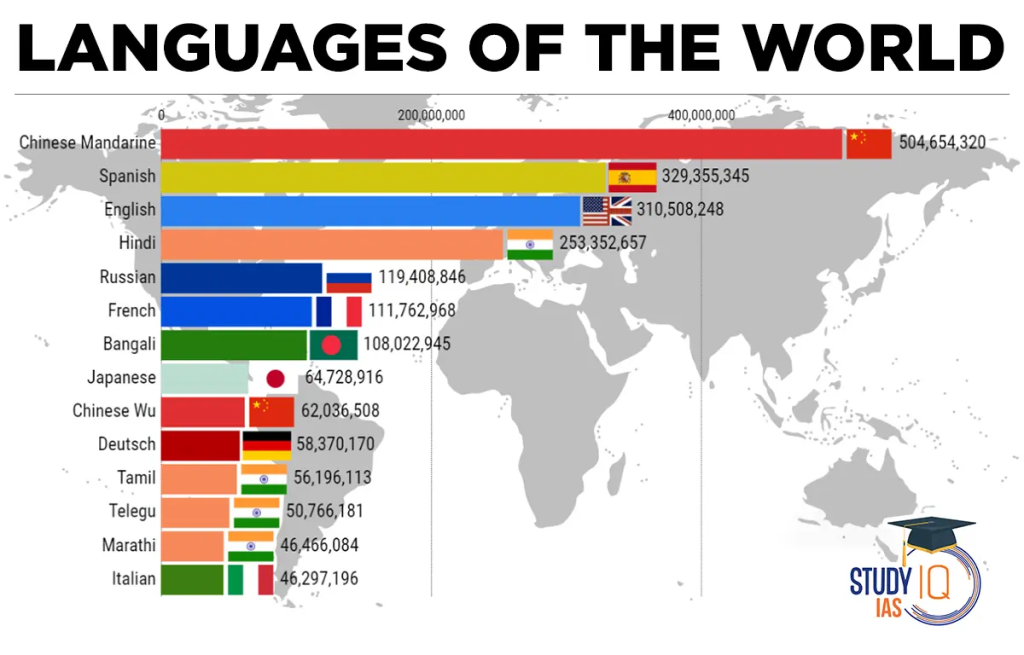
The Sino-Tibetan language family is another major language family, with Chinese being the most prominent branch. The origins of the Chinese language can be traced back to ancient China around 1200 BCE. Classical Chinese, used in historical texts, evolved into various regional dialects and eventually into modern Standard Mandarin, which is the official language of China and one of the most spoken languages in the world.
3.2. Tibeto-Burman
The Tibeto-Burman branch, another component of the Sino-Tibetan family, includes languages spoken in the Himalayan region and parts of Southeast Asia. Examples include Tibetan, spoken in Tibet, and Burmese, the official language of Myanmar.
The Development of Major World Languages
4. Latin and Its Legacy
4.1. Latin Origins
Latin, the language of ancient Rome, was a major influence on the development of Western languages. Initially spoken in the region of Latium (modern-day Lazio in Italy), Latin spread across the Roman Empire through military conquest, trade, and colonization.
4.2. The Romance Languages
As the Roman Empire fragmented and Latin evolved, it gave rise to the Romance languages. The transition from Latin to these languages was gradual, with Vulgar Latin (the spoken form of Latin) developing regional variations. The fall of the Roman Empire and the rise of various kingdoms further shaped these languages, leading to the emergence of distinct Romance languages.

The Spread and Influence of European Languages
5. European Colonialism
5.1. English, Spanish, and Portuguese Expansion
European colonialism played a significant role in spreading European languages around the world. English, Spanish, and Portuguese were introduced to various continents through colonization, trade, and exploration. The British Empire’s expansion spread English to North America, Australia, and parts of Africa and Asia. Spanish and Portuguese were introduced to Latin America and parts of Africa and Asia through Spanish and Portuguese colonization.
5.2. Language Contact and Creoles
Colonial encounters often led to the development of creole languages, which emerged from the mixing of European languages with local languages. These creoles often combined elements from multiple languages and became essential for communication in diverse colonial societies.
Contemporary Language Dynamics
6. Language Preservation and Revival
6.1. Endangered Languages
Many languages around the world are endangered due to factors such as globalization, cultural assimilation, and political conflict. Efforts are being made to preserve and revitalize these languages through documentation, education, and community initiatives. Examples include the revival of Hebrew in Israel and ongoing efforts to preserve indigenous languages in various regions.
6.2. The Role of Technology
Technology plays a crucial role in language preservation and promotion. Digital platforms, language learning apps, and online resources facilitate the learning and use of languages, making it easier for speakers to connect with their linguistic heritage and share it with others.
Conclusion
The history and development of major world languages reflect the complexity and dynamism of human societies. From ancient scripts to modern global languages, the evolution of languages is intertwined with historical events, cultural exchanges, and technological advancements. Understanding the origins and development of these languages provides valuable insight into the cultural and historical contexts that have shaped our world. As we continue to navigate an increasingly interconnected global landscape, recognizing the significance of linguistic diversity and promoting language preservation remain essential for fostering cultural understanding and appreciation.